Guides
Part of The complete workflow for machine identification, badge to written finding
The twelve-frame evidence set for photographing machine identification claims
How to photograph and present machine identification: the twelve-shot evidence set for identifying a sewing machine, how to light a worn serial stamp.
What to take away
- Twelve frames, always the same twelve. Missing frames are why identification requests stall.
- Raking light from one side is the only reliable way to read a worn stamped serial.
- Present a machine for identification with measurements, not adjectives.
- Display copies and keep originals. Light damage to paperwork is cumulative and permanent.
The twelve-frame evidence set
- Whole machine, front, square on.
- Whole machine, back.
- Left end, showing the faceplate and take-up.
- Right end, showing handwheel, motor or crank mounting.
- Bed from above, with the throat plate visible.
- Throat plate and feed dogs, close.
- Bobbin area with the plate or slide removed.
- Tension assembly, close.
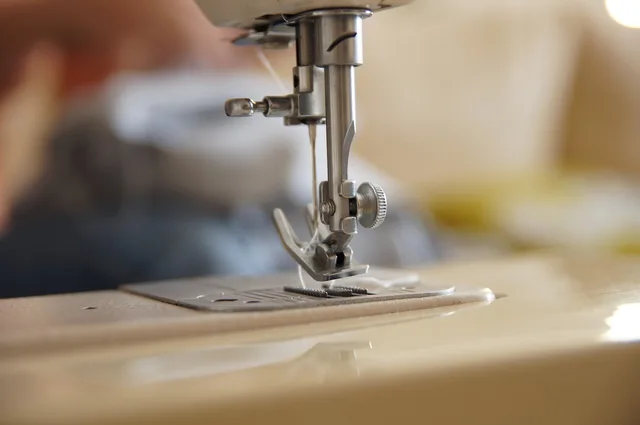
- Needle clamp and presser bar.
- Serial number or its expected location.
- Underside, machine tipped back and supported.
- Any badge, decal or plate, filled frame.
Number the files to match. An identification request with frames one, two and twelve is a request to guess.
Twelve-frame evidence set
- Whole machine, front, square on
- Whole machine, back
- Left endfaceplate and take-up
- Right endhandwheel or crank
- Bed from above, throat plate visible
- Throat plate and feed dogs, close
- Bobbin area, plate removed
- Serial number or expected location
Lighting a worn serial
A stamped number is a shallow depression, and flat light fills it with nothing. Move a single lamp until it is almost parallel to the surface and coming from one side. The shadow inside each digit appears at a particular angle and then vanishes again a few degrees later, so move slowly.
If the number sits on a shiny plated surface, breathe on it. The condensation clears from the raised metal first and holds momentarily in the depressions, which makes digits readable for two or three seconds.
Presenting a request people can answer
Include / Example
- Mechanism
- Vibrating shuttle, long boat-shaped bobbin
- Six measurements
- Bed 380 mm, shank 12 mm, bobbin 20 by 11 mm
- Marks transcribed
- "PAT NOV 1911", partial, digits after 1911 illegible
- Drive
- Treadle, original belt missing
- What you have ruled out
- Not a rotary hook, not slant needle
- Photograph numbers
- Frames 6, 7 and 9 attached
That format gets answers. "Any idea what this is?" with one blurry photograph does not.
Copyright in your own photographs, and in other people's
The evidence set is yours. Material you gather from elsewhere is not automatically free to republish. The Copyright Office's explanation of what copyright protects is useful here: copyright covers original works of authorship, and it does not protect facts, ideas, systems or methods of operation, though it may protect the way those things are expressed.
So the fact that a machine has a 380 millimeter bed is not anybody's property. A photograph or a manual page is. Cite and link rather than reproduce.
Presenting paperwork without destroying it
Manuals, leaflets and dealer paperwork are part of the identification record and they are fragile
The National Archives is blunt in its guidance on displaying family papers: visible and ultraviolet light causes fading and darkening. For best protection, display copies and keep the originals boxed, but use ultraviolet-filtering glass or acrylic if an original must be shown.
Scan once, display the scan, store the paper. The wider ordering of the identification process is covered in the identification pillar, and where to find people who can read your evidence set is covered in the guide to classes and collections.
![Medieval lead alloy, or lead, pilgrim badge. It consists of a the top left corner of a rectangular plaque and is missing the stitching ring that would have projected outwards from the plaque. It originally depicted SS Peter and Paul within a border inscribed [SIGNA APOSTOLORVM PET]RIETP AVLI +. The. The complete workflow for machine identification, badge to written finding](/covers/from-first-step-to-finish-machine-identification-explained-640.webp?v=74878966)