Industry
What five recurring situations reveal about owning a sewing collection
Five situations every sewing collection eventually meets, from an inherited estate to a flooded basement, and the decision each one forces on the owner.
What to take away
- Collections rarely fail slowly. They fail at a momenta death, a move, a leak.
- Decide the rules while nothing is happening. Decisions made in a crisis are worse.
- Owning an object is not the same as owning the rights in documents that came with it.
- Every situation below reduces to one questionwhat is this collection for?
Five situations, composed from patterns rather than individuals
The scenarios below are composites. They describe how these situations usually unfold rather than reporting on any particular household, and the point of each is the decision it forces.
Five Situations and Decisions
Situation
- Inherited estate
- Relative dies
- Downsize
- Move to smaller home
- Water event
- Pipe, roof, flood
- Deaccession
- Running out of room
- Loss claim
- Theft, fire, damage
Trigger
- Inherited estate
- Keep, disperse, document
- Downsize
- What is collection for
- Water event
- What gets saved first
- Deaccession
- What leaves, how honestly
- Loss claim
- Whether records exist
Decision
- Inherited estate
- Downsize
- Water event
- Deaccession
- Loss claim
The inherited estate
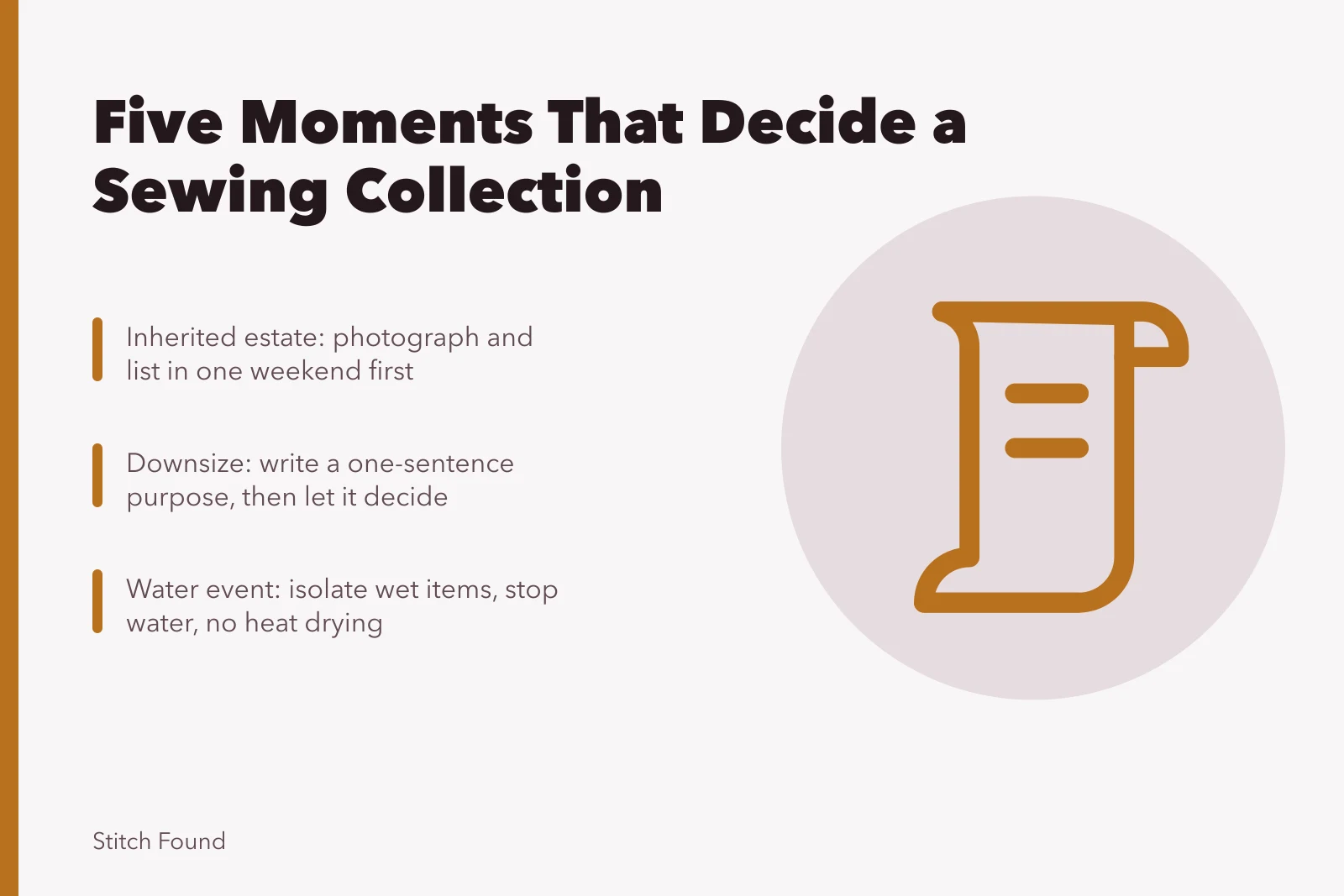
Someone dies and forty years of machines, tools, boxes and paper arrive at once, usually with a deadline attached to clearing a house. The instinct is to keep everything or to skip everything, and both are decisions made under pressure.
Estate Documentation Steps
- Photograph and list first
- Decide keep or disperse
- Check copyright ownership
- Record transfers if needed
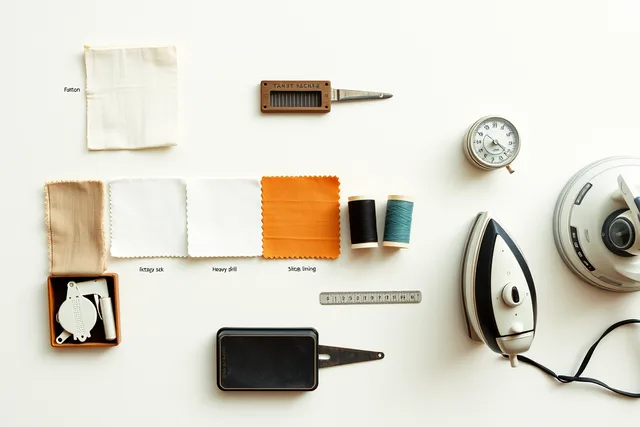
The workable middle is to photograph and list first, in one weekend, then decide. A list costs nothing and it is the only thing that cannot be recovered later.
Documents in an estate carry their own complications. Ownership of a photograph or a manual does not transfer the rights in it, and rights can move separately from objects. The Copyright Office's circular on recordation of transfers covers how transfers of copyright ownership and related documents are recorded, which is the mechanism behind that separation.
The downsize
Downsizing is the case that most reliably improves a collection, because it forces a purpose statement. A collection for research keeps documented pieces and disposes of duplicates. A collection for use keeps the machines that get used. A collection for display keeps the ones that look right together.
Write the purpose in one sentence, then let it decide.
The water event
The only situation in this list with a same-day answer. Isolate what is wet, stop the water, get air moving, and get advice before anything is dried with heat. Paper, timber and textiles all fail faster than metal.
The deaccession
Selling from a collection is normal and should be documented like any other transfer. Record what left, when, to whom in general terms, and what was disclosed about it. A collection that has been thinned honestly is worth more than one nobody can account for.
The loss claim
An insurance claim tests whether records exist. Photographs, serial numbers, purchase records and dated condition notes are the difference between a settled claim and an argument. This is the situation that retrospectively justifies every hour spent on cataloguing.
What the five have in common
Each is a documentation problem wearing a different hat. Case studies drawn from institutional holdings make the same point repeatedly; the National Archives ran Prologue magazine for nearly fifty years telling stories built on its own records, and the stories are only tellable because the records were kept.
The storage practices that underpin all of this are covered in our guide to storing tool materials, and the valuation records that support a claim or a sale are set out in the price guide.