Guides
Part of Vintage machine models compared: a published test protocol beats any favorites list
Can one weekend take a vintage machine model from manual to a written verdict
A two-day protocol for putting one vintage sewing machine model through a real test, from manual study to a dated stitch sample and an honest written verdict.
What to take away
- Study the manual before touching the machine. Half of all faults are threading.
- Test one model against a fixed fabric pack, not against your memory of another machine.
- Write the verdict as a capability statement, not as a rating out of ten.
- If the machine came with a family story, spend an hour trying to verify it.
Saturday morning: the manual
Read the whole thing, including the parts you assume you know. Threading path, bobbin winding direction, bobbin case orientation, tension route, needle insertion direction, lubrication points and the maintenance schedule.
Then thread the machine from the manual with the book open, even if you have threaded a hundred machines. The most common cause of a machine that "does not sew properly" is a take-up lever missed in a hurry.
Scanning a manual for your own use is straightforward, but sharing it is a separate question, and it depends on the age and status of the document. The Copyright Office's circular on the duration of copyright sets out how the term is calculated, which varies considerably with when a work was created and whether it was published.
Saturday afternoon: the baseline test
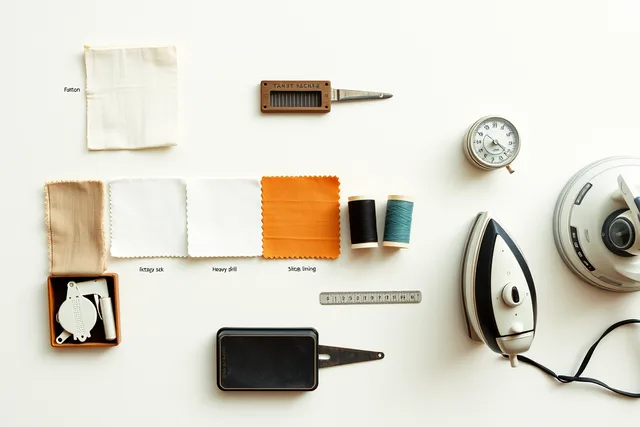
Run the standard sequence with the standard fabric pack, recording conditions for every seam.
| Test | Fabric | What to record |
|---|---|---|
| 1 | Two layers light cotton | Stitch appearance both sides |
| 2 | Four layers medium cotton | Skips, thread breaks, motor or treadle effort |
| 3 | Cross-seam over a fold | Whether it climbs the step |
| 4 | Slippery lining | Feed slip and puckering |
| 5 | Stable knit | Skipped stitches, needle suitability |
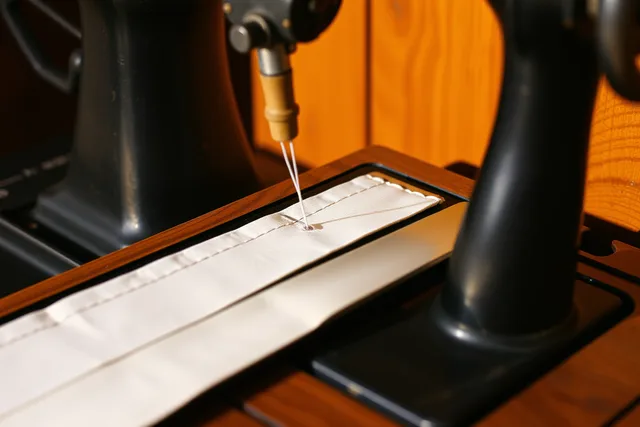
Photograph every sample, front and back. Staple them to the record sheet with the conditions written beside each.
Change nothing between tests except the fabric. If a result is poor, resist adjusting tension until the whole sequence has been run once, then run it again with the adjustment and keep both sets. The comparison between the two runs is more informative than either run alone.
Sunday morning: the provenance hour
If the machine has a family story attached, try to place it. Federal census records are the standard tool for this, and the National Archives explains that the first Federal Population Census was taken in 1790 and repeated every ten years, with a seventy-two year restriction governing when each becomes publicly available on its census records pages.
An hour is usually enough to confirm that a family was in the right town in the right decade, or to establish that the story cannot be checked. Both outcomes are worth writing down.
Sunday afternoon: the verdict
Write four sentences. What this model does well, under what conditions. What it does badly. What it would need to do better. Whether you would use it for the work you actually do.
Avoid ratings. A number compresses away the conditions, and the conditions are the only part of a hobby test that another person can use.
Repeat with a second model
The exercise becomes genuinely informative on the second run, because you finally have a comparison held at constant fabric, thread and needle. The kit needed is compared in our test bench tools article, and the same two-day structure applied to identifying an unknown machine is in the identification practice plan.