Guides
Part of Sewing repair business models worth watching under review: the good, the weak and the verdict
Setting up intake, custody and testing stations for a sewing repair shop
A traceable workflow for a sewing repair shop, from booking and intake through authorisation, parts custody and testing to a documented handover.
What to take away
- Every item in the shop has a tag, a location and a state. No exceptions.
- Get authorisation in writing before spending a customer's money.
- Test under load and keep the sample. It is the evidence the job was done.
- Know where the rules you are told about actually live, so you can read them yourself.
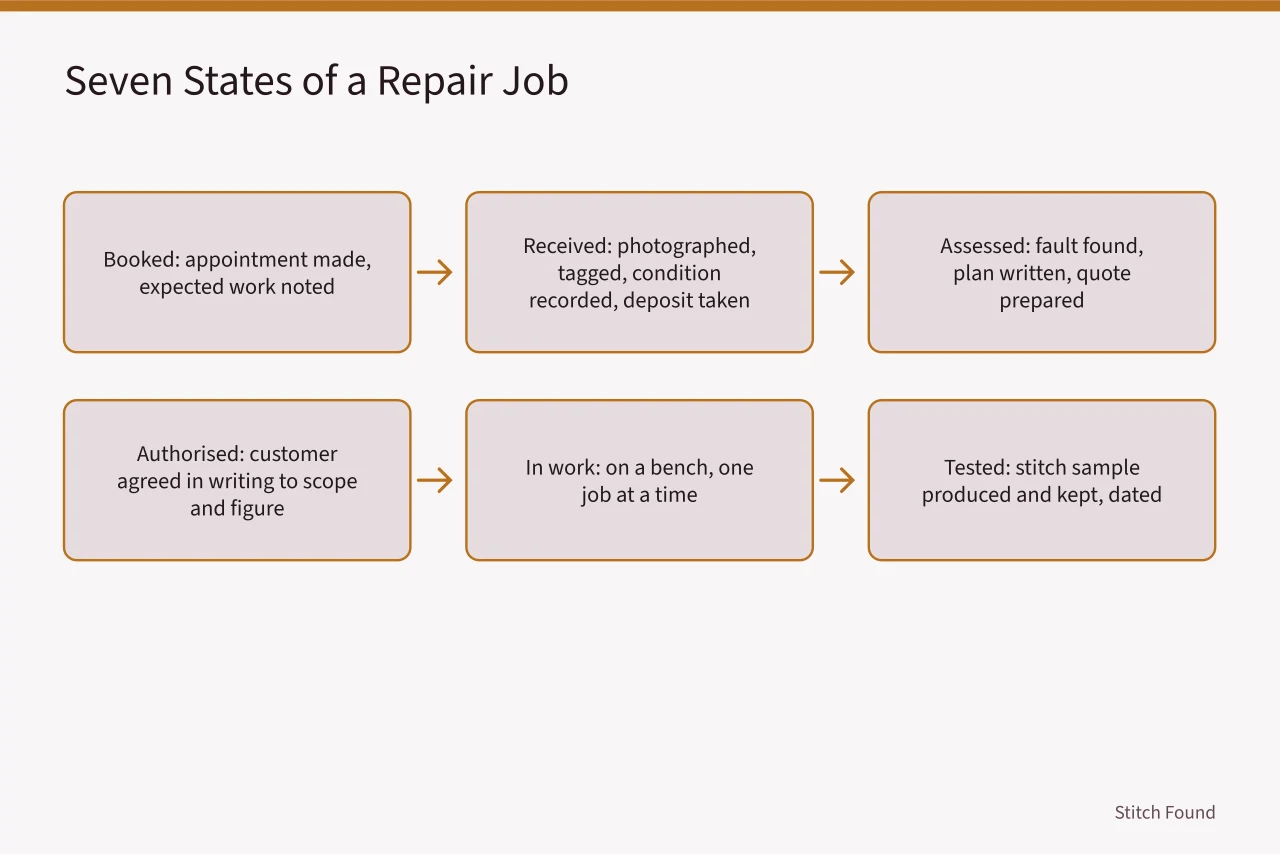
The seven states of a job
- Booked. Appointment made, expected work noted.
- Received. Photographed, tagged, condition recorded, deposit taken.
- Assessed. Fault found, plan written, quote prepared.
- Authorised. Customer has agreed in writing to a scope and a figure.
- In work. On a bench, one job at a time.
- Tested. Stitch sample produced and kept, dated.
- Returned. Handover documented, invoice issued, sample given.
Anything that cannot be placed in one of these states is lost, and a shop that cannot say which state a machine is in will eventually lose one.
Intake is the whole game
Photograph the machine from four angles and record the serial. List everything that came with it, including the case, the pedal, the cable and the accessory box. Write the customer's description of the fault in their words. Take the deposit. Attach the tag so it cannot be separated during disassembly.
Ten minutes at intake prevents almost every dispute that a repair business has.
Parts custody
Removed parts stay with the machine in a labeled bag, and they go back to the customer if replaced. Ordered parts get logged against the job number on arrival. A parts drawer that is not tied to job numbers becomes a communal pool within a month, and communal pools are where other people's components disappear.
Standards and where they come from
Repair work brushes against voluntary standards more often than people expect, particularly for anything sold on rather than simply repaired. The Consumer Product Safety Commission describes its participation in voluntary standards work with standards developing organizations across a long list of product categories, alongside its published summary reports of that activity.
When someone says a rule exists, it helps to find it.
Federal statutes are collected in the United States Code, which the Government Publishing Office explains is the codification by subject matter of the general and permanent laws of the United States. It has fifty-four titles, prepared by the Office of the Law Revision Counsel of the House of Representatives.
Being able to read the source, rather than relying on a forum summary of it, is a genuinely useful skill for a small operator.
Testing and handover
| Step | Record kept |
|---|---|
| Stitch test under load | Dated sample stapled to the job sheet |
| Tension check both sides | Noted on the sheet |
| Electrical function | Only if qualified, and stated as such |
| Accessories returned | Ticked against the intake list |
| Advice given | One line, so it is not disputed later |
Give the customer a copy of the test sample. It converts an invoice into evidence of work.
Setting the space up
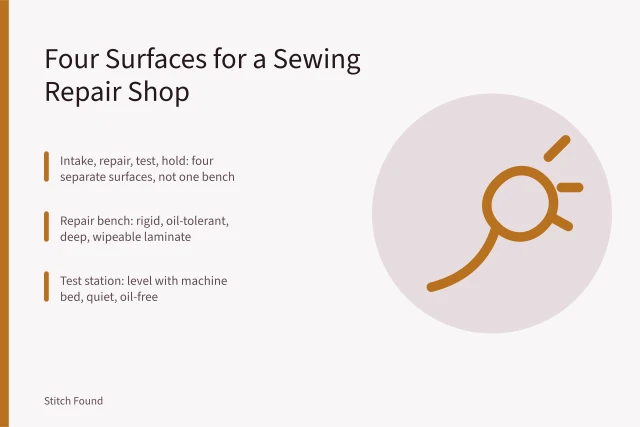
The physical layout that supports this workflow is covered in our shop work surface guide, and the week-shape that makes it survivable for one person is described in the article on solo repair operators.
Common questions
Do I need written authorisation for small jobs? A text message is written. The point is that a figure was agreed before money was spent.
How long should records be kept? Longer than you think. Customers return with questions years later, and so do disputes.
What if a machine cannot be repaired? Say so early, charge for the assessment, and return it with the diagnosis in writing.
Should the deposit be refundable? State the policy at intake, in writing, and apply it consistently to everyone.